


National Geographic 1989 August
Publisher: National Geographic
Format: Paperback
ISBN: none
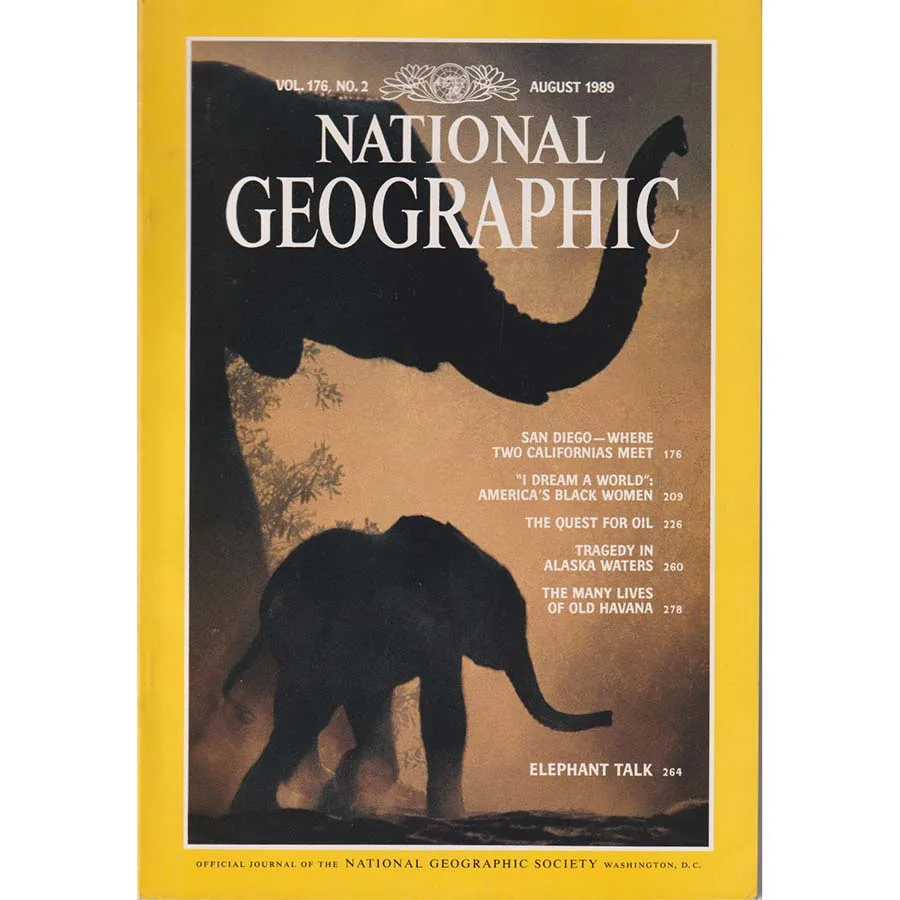
National Geographic, August 1989 turns up like a slow, dusty sigh of late-summer gravitas. The cover is cinematic silhouette perfection: elephants moving through a haze, trunks raised like question marks against the sky, as if the savannah itself has paused to say, “Right then—shall we talk about the state of things?” The headline tucked in there—“Elephant Talk”—sounds almost cosy, until you remember elephants are basically walking libraries of memory, grief, and extremely firm opinions.
This is peak National Geographic in the era of big themes delivered with impeccable manners. You open it expecting wildlife wonder and you get that, yes—but you also get a surprisingly sharp tour of the world as it looked in 1989, when everything felt like it was rearranging itself quietly behind the scenes. Nat Geo doesn’t do hysteria; it does weight. It lets you sit with a subject long enough to notice the details, the stakes, and the weird connections between places that look unrelated on a map.
The elephants are the emotional anchor: communication, family structures, intelligence, the kind of social complexity that makes humans feel both proud and slightly embarrassed. It’s the sort of feature that leaves you looking at animals differently—less “aww” and more “oh… you have a whole society in there.” And then, because Nat Geo refuses to let you stay comfortable in one mood, the contents list reads like an expertly curated whiplash playlist:
-
San Diego—Where Two Californias Meet: a borderland vibe check, geography as culture clash, sunshine with undertones.
-
“I Dream a World”: America’s Black Women: a feature title that carries a lot of history in a few words, and lands with the seriousness it deserves.
-
The Quest for Oil: the eternal plotline of the modern world, told with maps, numbers, and that faint sense of inevitability.
-
Tragedy in Alaska Waters: because 1989 had its own environmental heartbreaks, and Nat Geo was there to document the mess humans make when they’re in a hurry.
-
The Many Lives of Old Havana: a city portrait full of texture—peeling paint, music in the walls, history refusing to be tidied up.
The irony is that the elephants, on the cover, look like the most grounded beings in the entire issue. Everyone else is chasing borders, oil, identity, progress, and the consequences of progress. The elephants are just out here communicating, surviving, and carrying on with a dignity that makes our species look a bit frantic.
Condition: Good, which is ideal—this issue should feel handled, read, and kept, like something that mattered enough not to be thrown out. Sold by Crappy Old Books, which is wonderfully fitting: a beautifully produced global survey of intelligence, identity, resources, and disaster, acquired from a place with a name that sounds like it might also sell you a slightly warped globe and a stack of atlases that smell faintly of cupboard.
Keep browsing: See more National Geographic books Other books by National Geographic
